Vol 1 • Military Industrial Complex

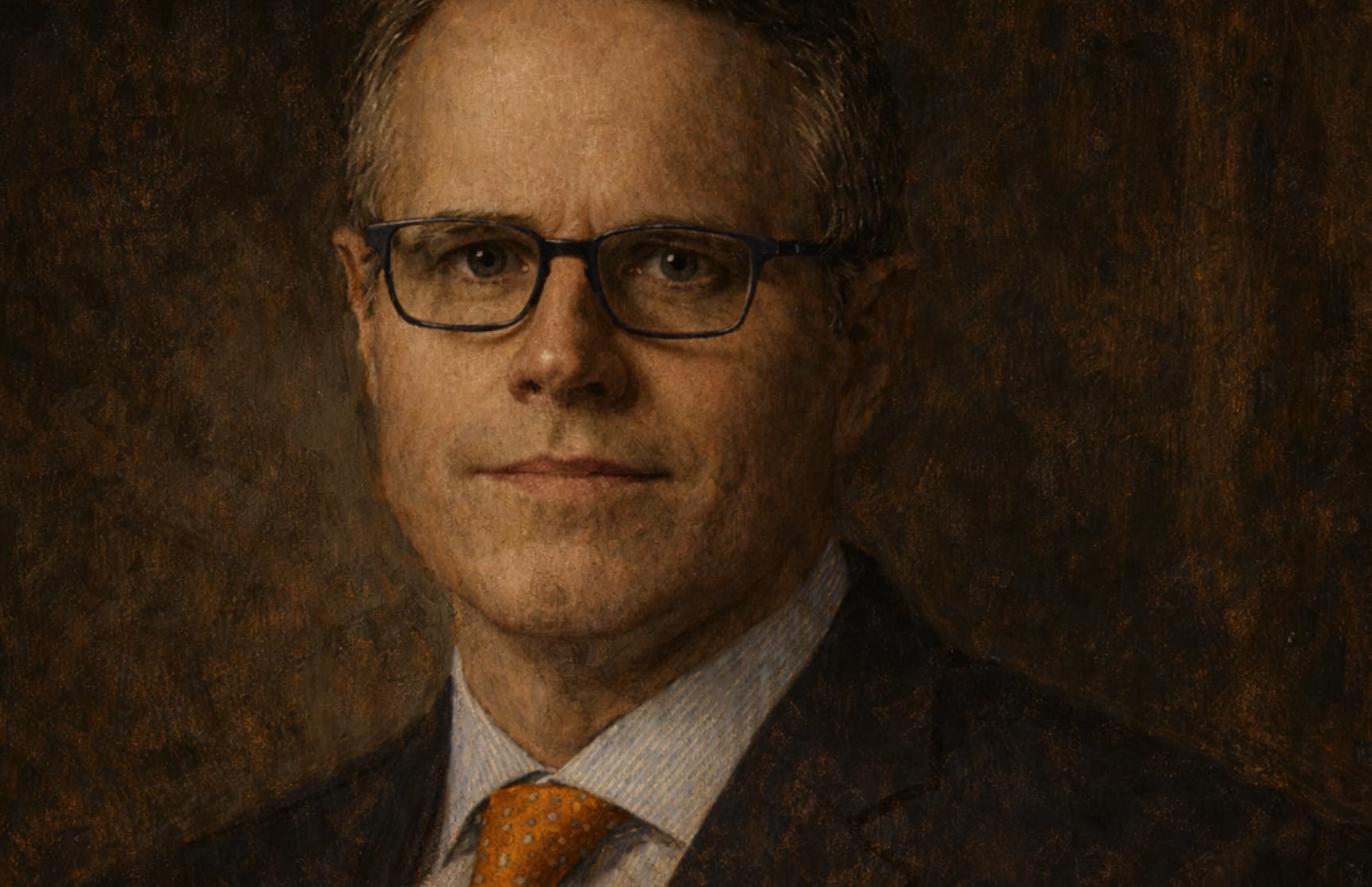


Raytheon Technologies — now rebranded simply as RTX — is the backbone of global missile defence, radar systems, and precision weapons. From Patriot batteries to AMRAAMs, from counter-drone tech to next-gen sensors, RTX products sit at the front line of every modern conflict zone. Unlike Lockheed, which owns mega-programmes, RTX thrives in the fast, brutal world of replenishment and rapid deployment.
The backbone of global missile defence, radar systems, and precision weapons.
RTX’s 2024 CEO letter is shaped by a single, unmistakable theme: the world is burning through capability faster than democratic supply chains can replenish it. Where Lockheed speaks the language of alliance architecture, RTX speaks the language of tempo — speed, replenishment, surge capacity, and industrial resilience.
The letter opens by framing 2024 not as an outlier year, but as a preview of the decade ahead: missile-saturated conflicts, drone swarms, contested airspace, and the return of high-intensity warfare. RTX positions itself as the company solving the “pacing gap” — the distance between how quickly adversaries can launch attacks, and how slowly Western systems can be replaced. This is deliberate positioning: urgency becomes the moat.
Financially, RTX highlights US$ 80.8B in adjusted net sales, strong growth across Collins, Pratt & Whitney, and Raytheon defence, and a record US$ 218B backlog — evidence of sustained demand for both commercial and military systems. The backlog split (54% defence, 46% commercial) underlines RTX’s hybrid identity: it thrives in peacetime through commercial aviation, and accelerates in wartime through missile defence, radars, and counter-drone systems.
A dominant message is industrial resilience. RTX stresses investment in supply chains, ramping facilities, workforce training, and the ability to scale production under crisis conditions. The subtext is clear: in the modern battlefield, logistics is lethality. A missile delivered six months late is a missile that fails its purpose.
Technologically, the letter emphasises sensors, command-and-control architecture, hypersonics, electronic warfare, and layered air defence — portraying RTX not as a weapons manufacturer, but as the spine of the kill chain.
RTX sells certainty in an age where certainty has become a scarce commodity.
RTX’s pressure node is the structural dependence on replenishment cycles driven by real-world conflict. Unlike Lockheed’s decades-long programmes, RTX’s revenue accelerates when stockpiles deplete, not simply when budgets rise. Every interceptor fired in Ukraine, every Patriot missile launched in the Middle East, every counter-drone burst in the Red Sea becomes tomorrow’s purchase order.
This creates a profound incentive tension: RTX prospers when the world runs low on the very systems meant to prevent escalation.
War moves fast — missiles run out in days.
At the same time, RTX is trapped between three conflicting timelines:
To survive, RTX must persuade governments to commit to long-term industrial capacity before the crisis hits — while simultaneously proving agility during the crisis.
The paradox is unavoidable:
The node crystallises into one line: RTX thrives in a world that can never afford to be fully stocked.
RTX reveals a brutal logic of modern warfare: deterrence is measured in stockpiles, not speeches.
In a world of drone swarms, missile saturation, and fragmented conflicts, RTX sells the one thing nations can’t risk running out of — time.
Its greatest strength isn’t technology alone, but the ability to turn geopolitical chaos into predictable industrial rhythm.
Where Lockheed binds alliances, RTX fuels the firepower that keeps those alliances alive.